
UXMagic Review: AI Design Tool, Pricing & My Test Results
My rating
A fast draft as real HTML. It invented a lot of extra text.
Best for: quick page or app drafts you will tidy by hand. Not for print files, or when you need to know who owns the output.

Tested and written by Miles Foster
Based on 7 graded tests and my verdict. How I rate
I tested UXMagic hands-on on its free plan, the way I test every AI design tool. I sent in the fixed landing page brief and the booking app brief, checked 40 required elements, made twelve edits, ran ten export checks and read the terms. UXMagic ranks #7 of the ten on my best AI design tools page.
Every measurement is in the UXMagic test results.
My UXMagic AI Design Tool Test Results
| Category | Grade | In short |
|---|---|---|
| Brief to First DraftFast for both briefs | 5/5Excellent | |
| Brief AdherenceEvery line right, much invented | 3/5Average | |
| First Draft QualitySmall tap targets and one dark screen | 3/5Average | |
| Editing FreedomNo multi-select, lock or crop | 2/5Below average | |
| Export & HandoffHTML and a sharp PNG only | 2/5Below average | |
| Rights & Commercial UseTerms silent on ownership and training | 2/5Below average | |
| Pricing & ValueOne paid plan, yearly or monthly | 3/5Average | |
| My verdict | +0.6 | |
| Overall | 3.5/5Good |
What Is UXMagic?
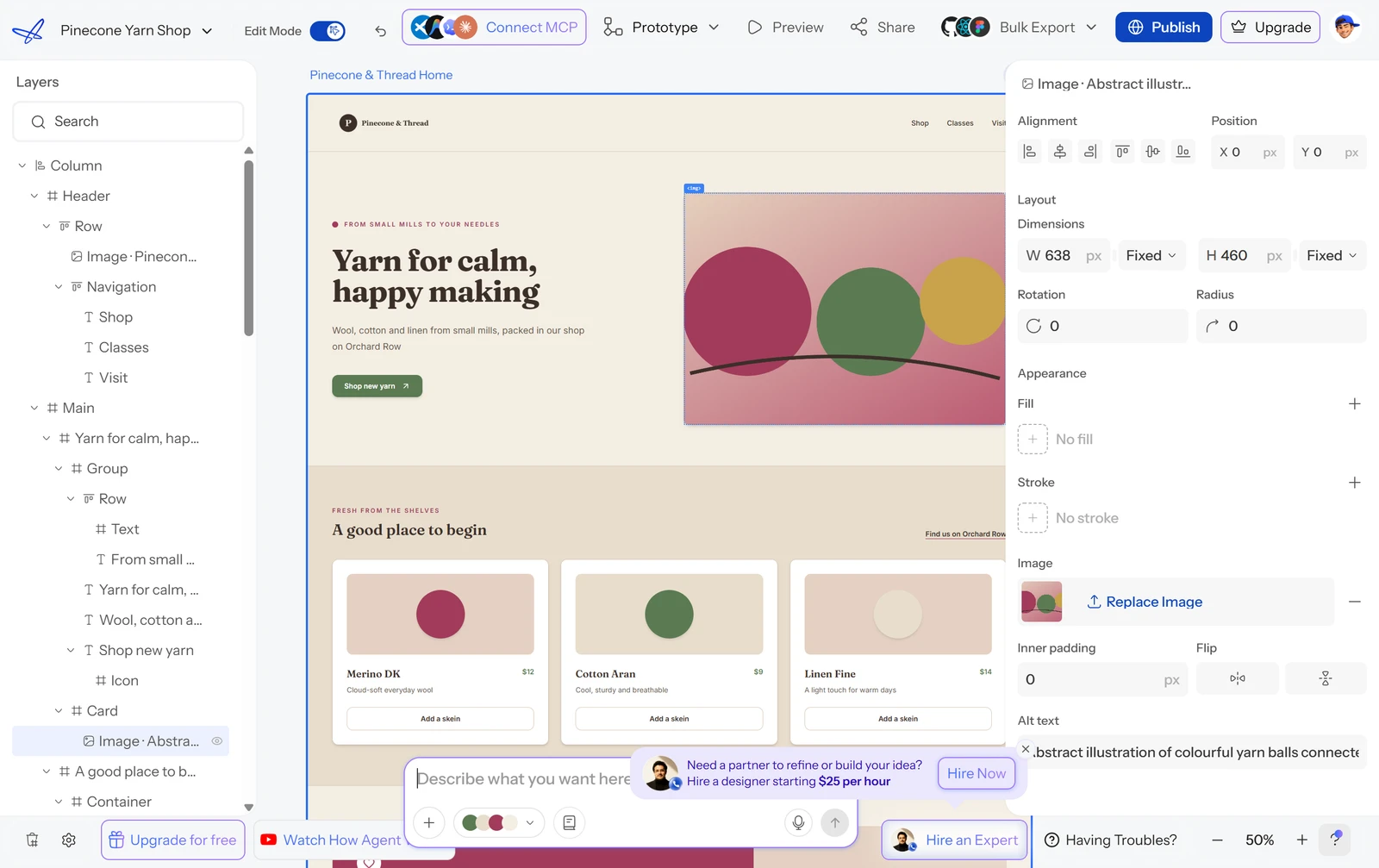
UXMagic is an AI design tool that turns a written brief into editable screens built as HTML. An agent proposes a screen plan, you approve it, and it designs the screens, which you then edit by hand or with more instructions.
It also has HTML and React code views, an Export to Figma option and a Copy to Figma button. The free plan gives 20 credits a day; UX Magic Pro starts at $17.50 a month paid yearly.
How I Tested UXMagic
Every AI design tool gets the same briefs: a bakery's social set, a booking app and a one-page shop site, each with 20 required elements. I ran the landing page and the booking app, and the credits ran out before the bakery set. Seven of the nine tests were graded; brand kit and collaboration were left out.
My tools
Last checked 12 Nov 2026UXMagic pros and cons
Pros
- A finished draft in about 90 seconds
- Both supplied files and every required line used
- Real HTML you can download and open
- Edit Mode costs no credits
- Preview at desktop, tablet and phone widths
- Pro from $17.50 a month paid yearly
Cons
- Two briefs used a whole day's free credits
- A lot of invented extra text
- No multi-select, lock or crop
- PDF, SVG and ZIP export are not on free
- Terms silent on ownership and training
- No refunds
UXMagic Pricing
UXMagic's one paid plan is UX Magic Pro at $17.50 a month paid yearly, about $210 a year, or $35 a month paid monthly. It gives 2400 credits a month and up to 400 screens.
UXMagic plans and prices
Live data· last check 12 November 2026| Plan | Price a month | |
|---|---|---|
| Free20 credits a day, up to 3 screens a day, 5 projects, 1 Figma export | $0 | 20 credits a day, up to 3 screens a day, 5 projects, 1 Figma export |
| UX Magic ProPaid yearly: 2400 credits a month, up to 400 screens, unlimited projects, 250 Figma exports | $35 | Paid yearly: 2400 credits a month, up to 400 screens, unlimited projects, 250 Figma exports |
| EnterpriseOn request: custom credits, unlimited team seats, SSO | Custom | On request: custom credits, unlimited team seats, SSO |
- Annual billing is $210/year, which is 50% off the $35 monthly price
- No refunds on subscriptions or credit purchases
- Enterprise is custom-priced via Contact Sales
I did not buy a plan, so renewal prices and the paid exports were not tested.
UXMagic Free Plan Limits
UXMagic's free plan gives 20 credits, and its pricing page adds up to 3 screens a day. The landing brief took 4 credits and the five-screen app took the other 16, so one day's credits went on two briefs. The cost is not shown before you send.
The five screens were built even though the page says 3 screens a day. The credits come back at midnight, and the panel says in how many hours.
UXMagic Brief to First Draft
UXMagic finished each brief about 90 seconds after I approved its screen plan, and the result was editable HTML screens, not pictures. The landing page was one screen of 1440 by 2045 pixels, and the app was five screens of 390 by 844.
It reads the attached files first, proposes a screen plan and waits for you to approve it, then shows a blue placeholder before the finished screens appear. On the landing page I took a while to approve, so that run was about two minutes from sending.
UXMagic Brief Adherence
UXMagic got 39 of 40 required elements right. Every headline, line, price, address and set of hours matched word for word, the fonts and colours were used, and the supplied logos and photos are in place.
It also invented a lot of text: small labels above titles, a line under each product, an Add a skein button on each card, a rewritten session title and example names. No prices, reviews or stock photos were invented. The one miss is supporting text in a lighter brown than the brief's.
UXMagic First Draft Quality
UXMagic's first drafts had seven faults. Text contrast passed everywhere except the app's Welcome screen, where dark text sits on a dark green overlay at about 2 to 1 and hides the supplied photo.
The nav links and one text link are only 20 pixels tall and calendar days are 36. At 390 pixels the landing page's nav runs into the logo and Visit is pushed off the edge, and the product cards show flat circles in place of products.
UXMagic Editing
Five of twelve edits worked in UXMagic. An element could be moved, a text box resized, one word changed in place, the page width set to 768 and its layout reflowed, and three undo steps worked.
You cannot select more than one element, so there is no changing a font or colour across the design and no aligning three elements. I found no crop control, no lock and no way to add a section without a prompt. Edit Mode costs no credits.
UXMagic Exports and Handoff
UXMagic passed four of ten export checks. The HTML download renders like the design with Fraunces and Inter loaded, and the PNG is sharp with no watermark at 2880 by 4090 pixels, twice the brief size.
There is no SVG, the PDF option is greyed out and the all-screens ZIP says Upgrade required. The downloaded HTML links to my logo and photo on UXMagic's own storage, so the assets are not exported.
UXMagic Usage Rights
UXMagic's terms say nothing about who owns what you generate, whether you can use it commercially, or whether your files train models. They do say that UXMagic can end your access at any time.
The terms also say "We currently do not offer refunds on subscriptions or credit purchases." The privacy policy covers personal data and does not mention model training. There is no indemnity.
Final verdict: is UXMagic worth it?
UXMagic is worth trying if you want a fast first draft of a page or app as real HTML and you will edit the extra text by hand. Each draft took about 90 seconds and 39 of 40 required elements were right.
It is not the tool if you need to know who owns the output, if you need SVG or print files, or if you want to run several briefs a day without paying.
The seven tests I could grade average 2.9 out of 5. I rate UXMagic 3.5 because its free plan, with no card entered, let me run seven of the nine tests, and the drafts it made were fast and faithful to the brief.
See the UXMagic test results and how I rate.
Best for: People who want a fast first draft of a web page or app screens as real HTML, and who will fix the extra text and the missing edit controls by hand.
Video review · 2:36
Watch me test UXMagic
The whole test in a few minutes, from screen recordings of the tests. Captions and the full transcript are one click away, and the video has a page of its own.
Transcript
Hi, I'm Miles. I tested UXMagic hands on, on its free plan, and here's the short version. It built a landing page and a five screen booking app in about ninety seconds each, as real HTML, and thirty nine of forty required elements were right. But it invented a lot of extra text, two briefs used up the whole free day, and only five of my twelve edits worked. My rating is three point five out of five, from seven tests.
So what is UXMagic? It's an AI design tool that turns a written brief into editable screens built as HTML. An agent proposes a screen plan, you approve it, and it designs the screens.
The free plan gives twenty credits a day. The landing page used four, and the booking app used the other sixteen, so the day was gone after two briefs. That is past my stop line, and the cost is not shown before you send, so I could not run the bakery brief.
Now the speed. Each brief was finished about ninety seconds after I sent it. The tool reads your files, proposes a screen plan, waits for you to approve, and then builds the screens.
Then accuracy. Thirty nine of forty required elements were right. Every headline, price and address matched, and the logo and photos were used. But it added more than thirty lines of text I never wrote, like labels, button names and example names.
The drafts had seven faults. On the app's welcome screen, dark text sits on a dark green overlay at about two to one contrast. The nav links are only twenty pixels tall, and on a phone the landing page's nav runs off the edge.
Next, twelve fixed edits. Five worked: moving an element, resizing a text box, changing one word, setting the page width and undo. There is no way to select more than one element, no crop and no lock, so a font or colour can't be changed across the design.
Exports passed four of ten checks. The HTML download renders correctly and the PNG is sharp with no watermark. But there is no SVG, the PDF option is greyed out, and the ZIP of all screens needs a paid plan.
On rights, the terms say nothing about who owns what you make, whether you can use it commercially, or whether your files train models. They do say there are no refunds.
On price, UX Magic Pro is seventeen dollars fifty a month paid yearly, about two hundred and ten dollars a year, or thirty five dollars a month paid monthly. It gives twenty four hundred credits a month.
So, is UXMagic worth trying? Yes, for a fast first draft you will tidy by hand. It's not the tool if you need to know who owns the output, or need print files. The seven tests average two point nine, and I rate it three point five, because the free plan let me run seven of nine tests.
Chapters · 12
Frequently asked questions
How much does UXMagic cost, and is there a free plan?
Yes, free. It gives 20 credits a day and up to 3 screens a day. UX Magic Pro is $17.50 a month paid yearly, or $35 a month paid monthly.
Is UXMagic legit and safe?
Yes, it is. I signed in with Google, entered no card and had no problem. Its terms say little about your files, and I could not find a statement on model training.
Who owns what I make with UXMagic?
Not stated. I found nothing on ownership or commercial use, and nothing on an indemnity for generated content.
Can UXMagic export files and code?
Partly. On the free plan the HTML download and a PNG, JPEG or WebP image worked. The all-screens ZIP needs a paid plan, the PDF option was greyed out, and there is no SVG.
What did I not test?
The bakery brief. Brand kit, collaboration, React export and the written-instruction edit were also left out. The day's credits ran out after two briefs.

Miles FosterOwner and tester, RankDudeMiles Foster is a pen name: the owner of RankDude, a private person, runs every test himself.
Disclosure. I tested on the free demo account anyone can open on UXMagic’s site. I signed up myself and paid UXMagic nothing. UXMagic didn’t see this review first and had no say in my rating. How RankDude makes money is on the disclosure page.